They say that unless a tragedy happens on your doorstep you can easily feel distanced by it all. However, being a backpacker, lucky enough to see more than just the end of your street, changes the way you watch and take in the nightly news bulletins.
You’ve visited these countries on the other side of the world, you’ve walked their streets, made friends with the locals, your heart is full of love for these far flung destinations, so when a catastrophic event happens it becomes more than a horrible unrelated news story; you picture yourself in these places that have now changed beyond belief.
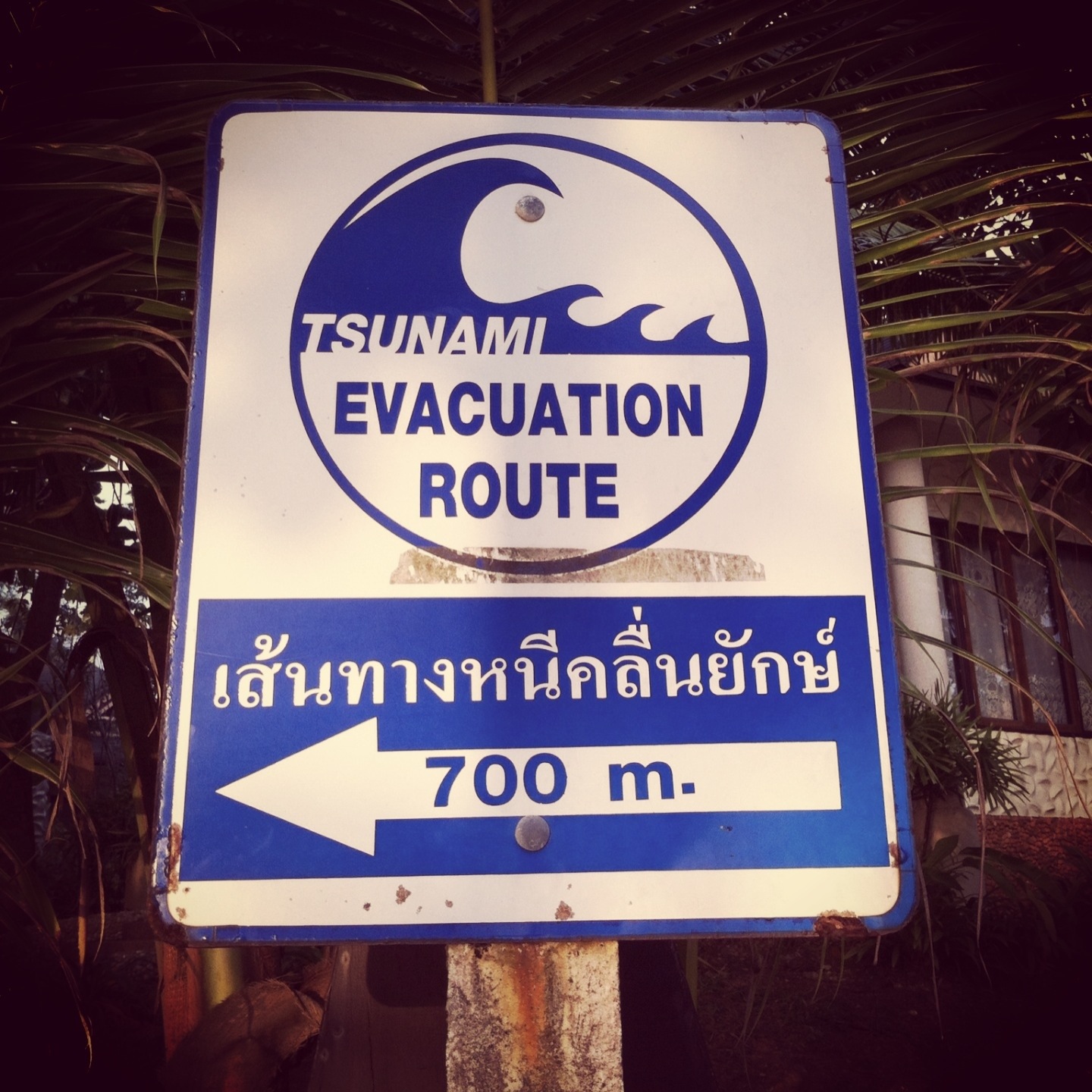
I visited Thailand 8 years after the awful Indian Ocean earthquake and tsunami. Seeing the busy beaches, bustling tourism and paradise setting you could be forgiven for thinking such tragedy never happened, until you spy the odd tsunami warning sign or memorial site. It’s only when speaking to locals that you realise how the rest of the world may have moved on but they can’t, and won’t, ever forget.
When I got my tattoo I met a lovely guy who used to work for Interpol, after the 2004 disaster his day job was to move and protect dead bodies so they could be identified before they decomposed in the tropical heat. He said this so matter of factly I was sure I’d misheard him. I couldn’t comprehend just what awful scenes he’d witnessed in the place we were stood sharing drinks in a bamboo covered beach bar. How lucky that I can go to sleep every night without having those unimaginable images imprinted on my brain.
Two years ago I travelled to Nepal. I stayed in noisy and unforgettable Kathmandu, travelled the bumpy road to picturesque Pokhara, trekked the Himalayas staying in basic hillside homestays with locals who communicated with smiles rather than words and took a flight past Mount Everest. I fell in love with this country, especially the welcome I received as a solo female backpacker.
Less than a month ago an earthquake killed more than 8,000 people and injured double that figure. Entire villages were flattened in an instant, it caused an avalanche on Mount Everest making it the deadliest day on the mountain in history. Entire villages were wiped out, temples, churches and UNESCO sites collapsed in an instant. For one of Asia’s poorest countries the effect of this natural disaster is unthinkable.
I became glued to the news, but instead of seeing mounds of rubble where buildings and homes once stood, starving, homeless but unnamed families, and piled up dead bodies, I saw myself there.
I thought of the kind wrinkled old lady who gave me peppermint tea to help with altitude sickness, the cheeky smiles of the children I played street football with and the strength of the sherpa’s I passed on the mountainside. I don’t know what happened to any of them. Watching the news became more than just unrelatable shocking images but very real and very heart breaking.
They say travel opens your eyes to the world, not just gorgeous sunsets, instagrammable scenery or mouthwatering meals, but the humanity and realisation that this planet isn’t as big as you may think.
Many aid organisations are desperate for funds to help those in need in Nepal. The Disasters Emergency Committee, made up of 13 UK charities such as Save the Children, British Red Cross and Oxfam are working to meet life-saving needs and rebuild the lives of communities. You can find out more and donate here.
Also, book fans should check out ‘Authors for Nepal’ on Ebay. Here you can bid for signed novels, critiques on your writing and even get a character named after you from the many authors taking part. All the money raised goes towards First Steps Himalaya, bringing relief to the worst hit villages in Nepal.